

Cybersecurity for Educational Institutions: Protecting Schools, Colleges, and Universities from Modern Cyber Threats
Marma Security
Marma Security Expert
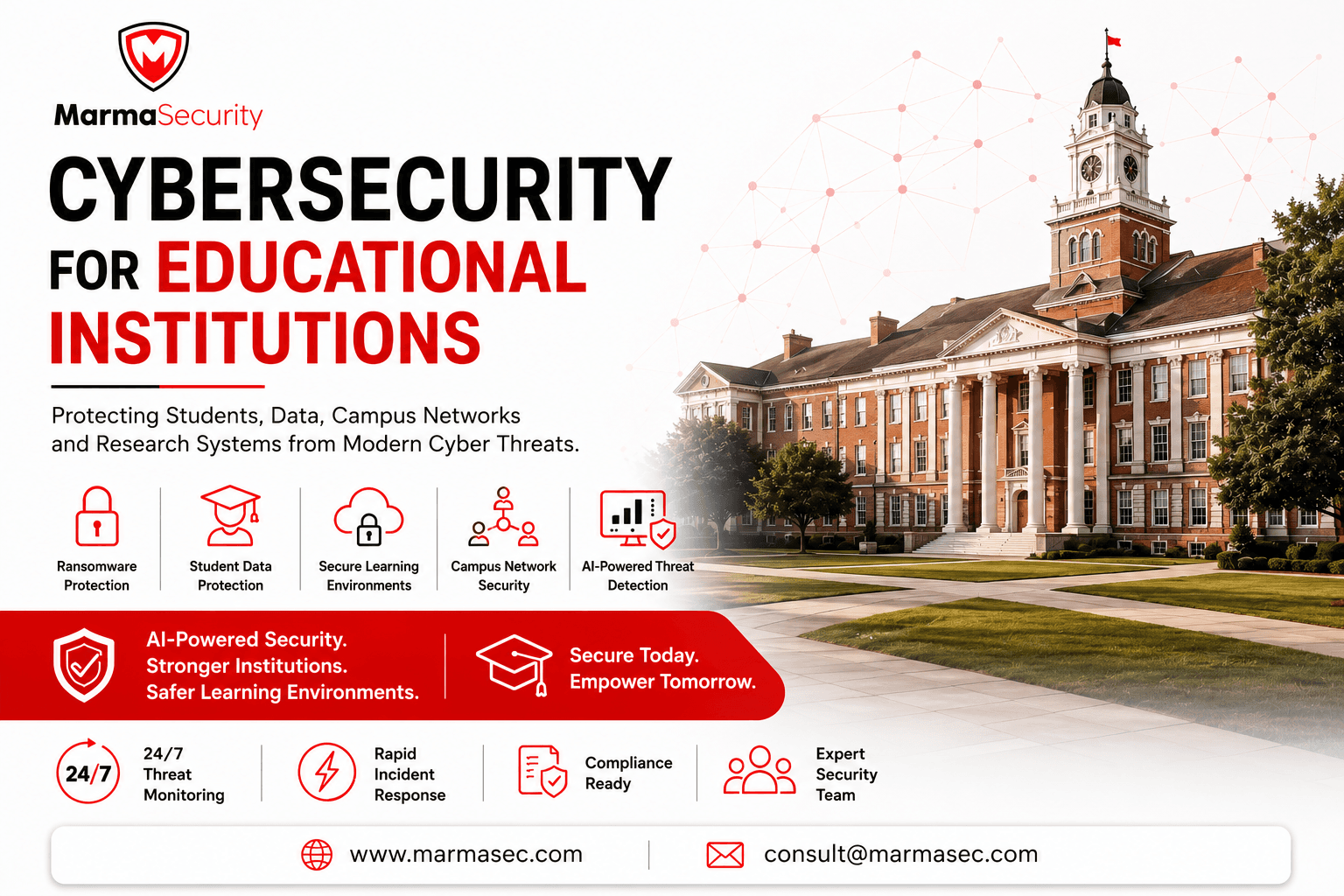
Introduction
The education sector is experiencing unprecedented digital transformation. Modern educational institutions rely on digital classrooms, cloud computing, learning management systems (LMS), student information systems (SIS), artificial intelligence tools, remote learning platforms, research databases, and connected campus infrastructure.
While these technologies improve educational experiences and operational efficiency, they also create significant cybersecurity challenges. Educational institutions have become prime targets for cybercriminals because they manage vast amounts of sensitive information while operating highly distributed networks.
According to recent cybersecurity reports, educational institutions remain among the top sectors targeted by ransomware attacks globally. Cybercriminals exploit vulnerabilities in campus networks, cloud platforms, remote learning environments, and third-party applications to gain access to valuable data.
As cyber threats continue to evolve, implementing comprehensive cybersecurity for educational institutions is no longer optional it's essential for protecting students, faculty, research assets, and institutional reputation.
What Are Cybersecurity Solutions for Educational Institutions?
Educational cybersecurity solutions are specialized technologies, platforms, and managed services designed to secure educational ecosystems from modern cyber threats.
These solutions protect:
- Student Information Systems (SIS)
- Learning Management Systems (LMS)
- Campus networks
- Research databases
- Administrative systems
- Faculty and student devices
- Cloud environments
- IoT and smart campus devices
- Identity and access management systems
A comprehensive educational cybersecurity framework includes:
- AI-powered threat detection
- Endpoint security
- Managed Detection and Response (MDR)
- Cloud security
- Identity protection
- Email security
- Security awareness training
- Incident response
- Zero Trust architecture
- Continuous monitoring
Why Educational Institutions Are Prime Targets for Cybercriminals
Educational institutions represent attractive targets because they contain:
- Personally identifiable information (PII)
- Financial records
- Medical information
- Academic records
- Intellectual property
- Research data
- Government-funded research projects
Key drivers for cybersecurity investment include:
- Protecting student and faculty information
- Preventing operational disruptions
- Securing research intellectual property
- Maintaining educational continuity
- Meeting regulatory requirements
- Protecting institutional reputation
- Improving cyber resilience
Top Cybersecurity Threats Facing Educational Institutions
Ransomware Attacks
Ransomware remains the most damaging threat affecting educational institutions.
Attackers exploit:
- Phishing emails
- Weak passwords
- Remote access vulnerabilities
- Unpatched systems
- Third-party vendors
Consequences include:
- Campus shutdowns
- Learning disruptions
- Financial losses
- Data theft
- Reputation damage
Phishing and Social Engineering
Students and faculty are frequent targets of phishing campaigns.
Common attacks include:
- Credential theft
- Financial scams
- Business email compromise
- Account takeover attacks
Student Data Breaches
Educational institutions store:
- Student records
- Financial aid information
- Medical records
- Examination results
- Identity information
Unauthorized access can lead to severe compliance and financial consequences.
Insider Threats
Threats can originate from:
- Employees
- Students
- Researchers
- Contractors
- Third-party partners
Cloud Security Risks
Cloud adoption introduces challenges including:
- Misconfigured services
- Identity attacks
- Insecure APIs
- Unauthorized access
Student Data Protection and Compliance
Educational institutions must protect sensitive information using:
| Security Control | Benefit |
|---|---|
| MFA | Prevent unauthorized access |
| Encryption | Protect sensitive data |
| IAM | Manage identities |
| DLP | Prevent data leaks |
| Monitoring | Detect threats |
| Zero Trust | Reduce attack surfaces |
Campus Network and Smart Campus Security
Modern campuses include:
- Smart classrooms
- IoT devices
- CCTV systems
- Access control systems
- Research labs
- Wireless networks
- Student devices
Security measures include:
- Network segmentation
- Endpoint security
- NAC
- SIEM
- Threat detection
- Continuous monitoring
Learning Management System (LMS) Security
Popular LMS platforms include:
- Moodle
- Blackboard
- Canvas
- Google Classroom
Security controls should include:
- MFA
- Access control
- API security
- Audit logging
- Data encryption
Cloud Learning and Remote Education Security Challenges
Major risks include:
- BYOD security
- Remote access
- Shadow IT
- SaaS applications
- Identity theft
- Third-party integrations
Supply Chain and Third-Party Cybersecurity Risks
Educational institutions depend heavily on:
- Cloud providers
- LMS vendors
- Payment systems
- Research partners
- Software vendors
Risk mitigation strategies include:
- Vendor assessments
- Security audits
- Continuous monitoring
- Access controls
How Marma Security Protects Educational Institutions
AI-Powered Threat Detection
- Machine learning
- Behavioral analytics
- Threat intelligence
Managed Detection & Response
- 24/7 monitoring
- Threat hunting
- Incident response
Endpoint Security
- Device protection
- EDR/XDR
- Malware prevention
Cloud Security
- SaaS security
- Multi-cloud visibility
- Identity protection
Zero Trust Architecture
- Identity verification
- Least privilege
- Continuous monitoring
Security Awareness Training
- Student awareness
- Faculty training
- Phishing simulations
Benefits of Educational Cybersecurity Solutions
- ✅ Reduced ransomware risk
- ✅ Improved cyber resilience
- ✅ Better compliance
- ✅ Stronger data protection
- ✅ Enhanced visibility
- ✅ Reduced downtime
- ✅ Protected research assets
- ✅ Increased stakeholder trust
- ✅ Improved business continuity
Future of Education Cybersecurity
Emerging technologies include:
- AI-powered SOC
- Extended Detection and Response (XDR)
- Predictive analytics
- Autonomous response
- Zero Trust
- Identity-first security
- Behavioral AI
Why Choose Marma Security
Marma Security delivers:
- AI-driven threat detection
- MDR services
- Endpoint protection
- Cloud security
- Identity protection
- Zero Trust implementation
- Security awareness
- 24/7 monitoring
Conclusion
Educational institutions face increasingly sophisticated cyber threats, making AI-powered cybersecurity solutions essential for protecting students, faculty, research environments, and critical educational infrastructure while ensuring business continuity and long-term cyber resilience. Similar challenges exist across other critical sectors as well.
Explore our guide on Healthcare Cybersecurity Solutions to learn how healthcare organizations protect sensitive patient data, medical systems, and critical healthcare infrastructure from evolving cyber threats.
FAQs
Why is cybersecurity important for educational institutions?
Cybersecurity protects student data, research systems, campus networks, and educational operations from cyberattacks.
What are the biggest cybersecurity threats facing educational institutions?
Ransomware, phishing, insider threats, cloud attacks, and data breaches remain major risks.
How can universities protect student data?
By implementing MFA, encryption, Zero Trust, endpoint security, and continuous monitoring.
What is Zero Trust security?
Zero Trust continuously verifies identities and restricts access using least-privilege principles.
How does Marma Security help educational institutions?
Marma Security provides AI-powered threat detection, MDR, endpoint protection, cloud security, and Zero Trust solutions.